
How Promotional Product Fulfilment Services Work for Australian Online Stores
Discover how promotional product fulfilment services for online stores can streamline your branded merch operations and boost customer experience.

Written by
Ruby Ahmed
Buying Guides & Tips
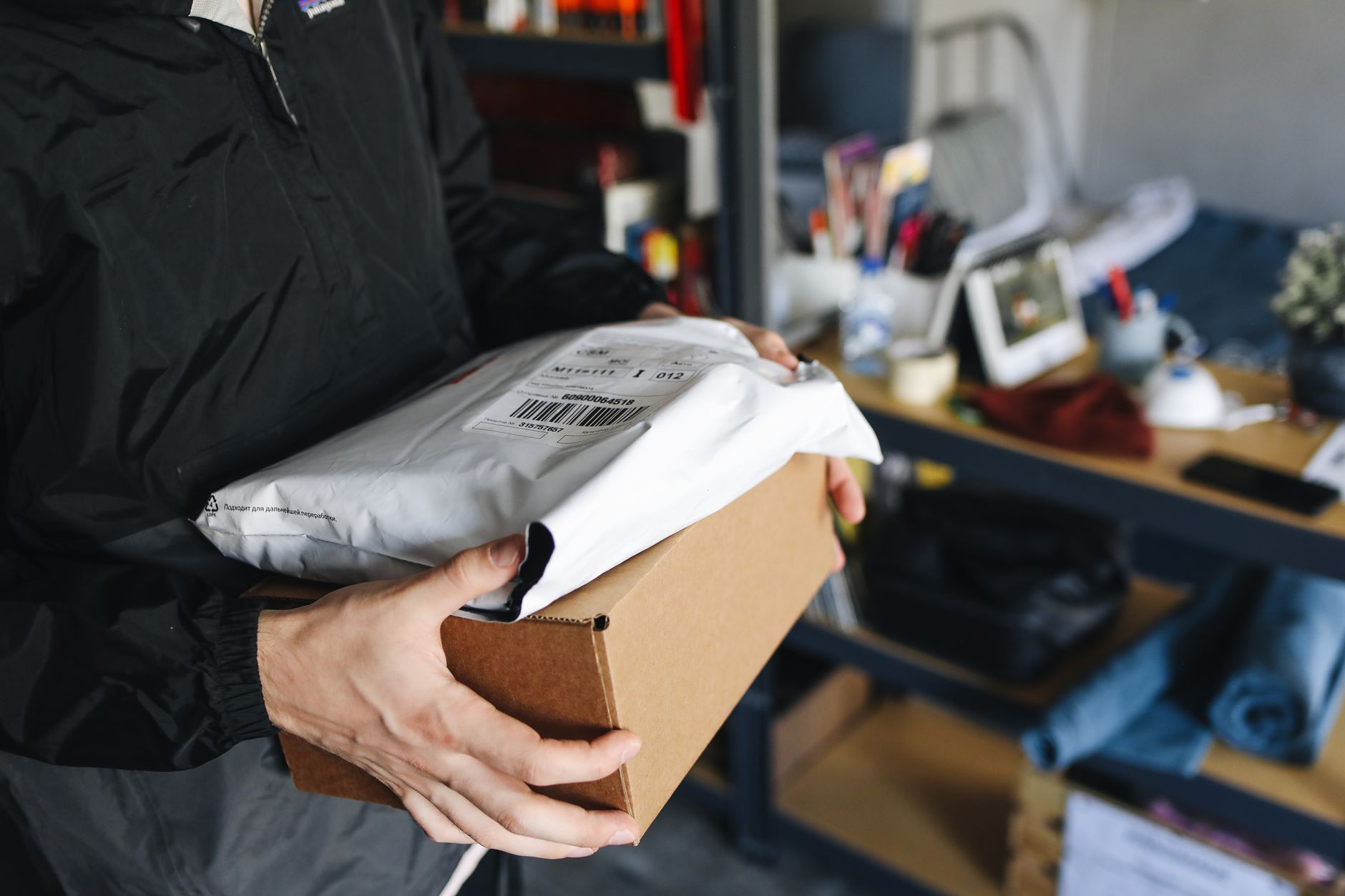
Running a branded merchandise program for your business used to mean managing stacks of boxes in a back storeroom, chasing couriers, and manually sending out products one order at a time. For many Australian businesses, that approach simply doesn’t scale — and it certainly doesn’t project the kind of professional image that strong branding demands. That’s where promotional product fulfilment services for online stores come in. Whether you’re a corporate team in Sydney distributing branded welcome kits to new employees, an event organiser in Melbourne shipping merchandise to conference attendees, or a national brand managing a staff reward program from Brisbane to Perth, understanding how fulfilment services work can save you enormous time, money, and frustration.
What Are Promotional Product Fulfilment Services?
At their core, promotional product fulfilment services handle the storage, picking, packing, and shipping of branded merchandise on behalf of your business. Rather than receiving an entire bulk order and managing distribution yourself, you work with a fulfilment partner who holds your stock and dispatches items as needed — whether that’s one at a time or in bulk consignments.
For businesses with online merch stores — think staff uniform portals, customer loyalty shops, or event merchandise hubs — fulfilment services are the invisible engine that keeps everything running smoothly. When an order comes through your store, the fulfilment provider receives the notification, picks the relevant products, packs them to your specifications, and ships them directly to the end recipient.
This model is sometimes called “pick and pack” or “3PL” (third-party logistics), and it’s become increasingly common among Australian businesses that want a professional, scalable merchandise operation without the overhead of managing a warehouse themselves.
How It Differs from Standard Bulk Ordering
Standard promotional product orders typically involve one shipment to one address. A fulfilment model is fundamentally different: it’s designed for ongoing, multi-recipient distribution. Think of it as the difference between a one-off catering order and running a restaurant. Both involve food, but the operational demands are completely different.
If your business regularly sends out branded products — onboarding kits, client gifts, event packs, staff rewards — a fulfilment service gives you a repeatable, automated system rather than a manual, ad hoc process.
Key Components of a Promotional Product Fulfilment Setup
1. Your Branded Merch Store
Most fulfilment programs start with an online store or portal. This could be a branded staff shop where employees order their own uniforms and accessories, a customer-facing merchandise store, or an internal gifting platform for HR teams. The store acts as the front end — capturing orders, processing payments or approval workflows, and feeding order data to the fulfilment warehouse.
Understanding why brand consistency matters across all customer and employee touchpoints is essential here. Your merch store should reflect your brand identity just as much as the products themselves.
2. Product Range and Stock Holdings
The products you offer through your online store can span a huge range. Common categories include:
- Apparel: Branded polo shirts, sportswear with logo, and varsity jackets for team uniforms or staff gifting
- Drinkware: Sustainable branded water bottles and sport water bottles for active or outdoor-focused teams
- Bags: Custom tote bag designs and insulated tote bags for events or client gifts
- Tech: Promotional USB drives and tech accessories for corporate gifting or conference packs
- Stationery: Sticky notes and branded notebooks for office supply programs
- Seasonal items: Summer promotional products for seasonal campaigns or event giveaways
- Fun add-ons: Personalised stubby holders for trade events or team celebrations
The key is selecting a product range that suits your audience and can be stored efficiently in a fulfilment warehouse. Products with multiple variants (sizes, colours) require careful inventory management to avoid stockouts on popular items.
3. Warehousing and Inventory Management
Your fulfilment partner will store your branded stock in their warehouse and maintain real-time inventory tracking. A good provider will give you visibility into stock levels through a dashboard or regular reporting, so you can plan reprints before you run out of key items.
For businesses managing large-scale programs — say, a national retailer in Adelaide shipping welcome kits to hundreds of new franchisees — having accurate inventory data is critical. Nothing undermines a slick onboarding experience like discovering your branded water bottles are out of stock the week a new wave of hires starts.
4. Pick, Pack, and Dispatch
When an order is placed, the fulfilment team picks the relevant products, packs them according to your brand guidelines (tissue paper, branded tape, custom inserts, or simply a plain satchel — whatever you’ve specified), and ships them to the recipient. For corporate gifting programs, the unboxing experience is often as important as the product itself, so don’t overlook the packaging brief you give to your fulfilment partner.
5. Shipping and Tracking
A professional fulfilment service will have established carrier relationships to keep shipping costs competitive and delivery timeframes reliable. Most will offer tracked shipping as standard, and some will integrate tracking notifications directly into your online store so recipients receive automated dispatch emails.
Why Australian Businesses Are Embracing Online Merch Stores with Fulfilment
The shift toward online merch stores with integrated fulfilment isn’t just a trend — it reflects real operational needs in the Australian market.
For HR and people teams, online staff stores with fulfilment solve a persistent headache: distributing uniforms and branded items to employees across multiple states. A Sydney-based HR manager shouldn’t need to be manually posting polo shirts to team members in Hobart, Canberra, and Darwin. A staff portal backed by fulfilment does all of that automatically.
For marketing teams, a fulfilment-backed store makes it easy to run ongoing brand-building campaigns. Need to send promotional tech accessories to your top 50 clients this quarter? Load the list, process the orders through your portal, and your fulfilment partner handles the rest.
For event organisers, particularly those running recurring conferences or sporting events, holding stock and dispatching registration packs or attendee gifts through a fulfilment model is dramatically more efficient than managing shipments in-house.
The Quality Factor
When products are stored and dispatched by a third party, quality control matters enormously. Your fulfilment partner should be handling your merchandise with care — and that starts with sourcing well-decorated, durable products in the first place. Whether you’re working with digital printing or sublimation on custom caps, the decoration quality should hold up to storage, handling, and repeat use.
Practical Considerations When Setting Up a Fulfilment Program
Minimum Order Quantities and Reprints
Most promotional products carry minimum order quantities (MOQs), typically starting anywhere from 25 to 100 units depending on the product and decoration method. When setting up a fulfilment program, you’ll generally need to order your initial stock in bulk, then reorder as inventory depletes. Building a reorder trigger point into your inventory management (say, reordering when stock drops below 30 units) helps you avoid the dreaded stockout.
Setup Costs and Ongoing Fees
Fulfilment services typically involve several cost components:
- Setup fees for configuring your online store and integrating with the fulfilment system
- Storage fees charged per pallet, shelf, or cubic metre depending on your stock volume
- Pick and pack fees per order, which vary based on the number of items per pack
- Outbound shipping costs passed through at carrier rates
It’s worth modelling these costs against your expected order volume before committing. For high-volume programs, the per-order cost often comes down significantly. For lower-volume needs, a simpler bulk order and self-distribution model might be more cost-effective.
Lead Times and Planning
Setting up a fulfilment program for the first time takes longer than a standard product order. Allow at least four to six weeks to source and decorate your initial stock, configure the online store, and complete testing before your program goes live. Rushing this process is a common mistake — and it almost always leads to a poor launch experience.
If you’re planning around a key date (a new financial year, a major product launch, or an annual conference season), work backwards from that date and give yourself adequate runway.
Artwork and Brand Consistency
With multiple products across multiple decoration methods, maintaining brand consistency requires careful artwork management. Keep a centralised library of your approved brand files — including colour specifications, logo variations, and usage guidelines — and share these clearly with your product supplier at the outset. Products like recycled office supplies or niche items like promotional tablet stands for restaurant table ordering require decoration briefs specific to their format, so one-size-fits-all artwork rarely works.
How to Choose the Right Fulfilment Partner
Not all fulfilment providers are created equal, and the best fit for your business depends on your volume, product types, and operational complexity. Here’s what to look for:
- Integration capability: Can they connect with your e-commerce platform (Shopify, WooCommerce, a custom portal)?
- Product sourcing: Do they offer in-house branded merchandise sourcing, or do you need to source elsewhere and ship in?
- Reporting: Can you access real-time inventory and order reporting?
- Packaging options: Do they offer branded packaging, gift wrapping, or custom inserts?
- Scalability: Can they handle a spike in orders around peak periods like end-of-year gifting or major events?
- Location: A partner with a warehouse on the east coast (Sydney, Melbourne, Brisbane) typically offers faster and cheaper delivery to the bulk of Australia’s population
Ask for references from similar-sized businesses, and if possible, place a test order to evaluate the packing quality and delivery experience firsthand.
Conclusion: Key Takeaways
Promotional product fulfilment services for online stores represent one of the most effective ways for Australian businesses to scale their branded merchandise programs without drowning in logistics. Whether you’re distributing staff uniforms, client gifts, event merchandise, or seasonal campaigns, a well-run fulfilment setup saves time, reduces errors, and delivers a consistently professional brand experience.
Here are the key points to carry away:
- Fulfilment services handle storage, picking, packing, and shipping so your team can focus on strategy rather than logistics
- An online merch store is the essential front end — it captures orders, manages approvals, and integrates with your fulfilment partner’s system
- Product quality and decoration standards matter enormously — what gets stored and shipped represents your brand every time it lands with a recipient
- Budget carefully for setup, storage, pick-and-pack, and shipping costs before committing to a fulfilment model — the numbers need to stack up for your volume
- Allow adequate lead time for initial stock production, store configuration, and testing before your program goes live
- Choose a fulfilment partner based on integration capability, reporting transparency, and scalability, not just price
With the right setup in place, a promotional product fulfilment service for your online store can transform your merch program from a logistical headache into a genuine brand asset.